CONCRETE PROTECTION DEGREES
For protective treatments on concrete surfaces, the selection must consider external exposure factors and concrete quality. While weather resistance is paramount for high-quality concrete, protecting against degradation and carbonation is essential for low-quality concrete.
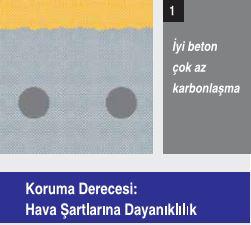
Good concrete, very lıttle carbonatıon
Thanks to their consolidation properties (silicification), silicate coatings provide long-term weather-wear resistance and airtightness on the concrete surface. Additional weather resistance can be further enhanced with water-repellent products.
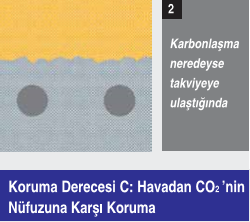
When carbonatıon has almost reached the reınforcement
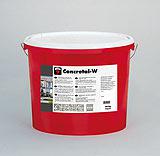
The concrete surface must be sealed in a way that prevents carbon dioxide gas penetration. For effective results, pores and blowholes should be closed with a fairing coat before coating application.
When reınforcement ıs already ın the carbonated zone
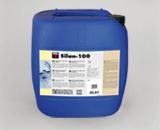
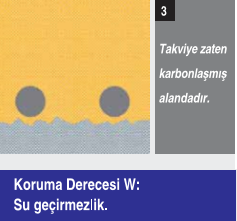
The electrolytic wear process must be suppressed by reducing the water content in the concrete. The coating must be both water-repellent and highly water-vapor permeable (breathable).
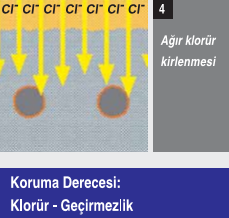
Heavy chlorıde contamınatıon
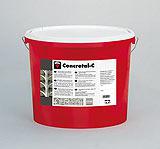
Chloride salts are transported through water. The coating must prevent chloride-laden water penetration with strong waterproofing, keeping the concrete dry so that existing chloride does not activate.
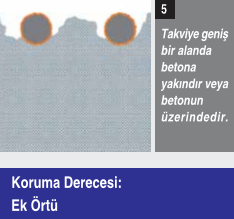
When reınforcement ıs close to the concrete surface or exposed over a wıde area
An additional concrete cover is required for long-term protection. Additional covers of 1-3 cm are generally applied by spraying. Concrete compacted by the spray effect experiences almost no carbonation. A final surface coating is applied for aesthetics and weather resistance.